
People Behind the Numbers
Meet Randy Teuber
Kevin Briscoe
At CFO Selections®, we may work in numbers… but we’re in the business of people. Because behind every financial report is a person making hard decisions, and behind every engagement is a human-to-human connection. In this series, we’re shining a light on those stories — introducing the consultants who guide our clients forward and the leaders who bring those numbers to life.
____________________________________________________________________________________
The board’s vice chair didn’t want to hire an investment banker.
“We don’t need to spend five or seven or ten million dollars on a fairness opinion,” he said. “Why don’t we just have Randy do it?”
Randy’s reaction was, “I love the vote of confidence, but are you kidding me?”
He did it anyway.
In meeting after meeting, Randy sat across the table from the head of M&A at VF Corp and the vice president from their investment firm. The Williamson family – four generations into running the work-wear company most people now know as Dickies – had agreed to sell.
“It was two versus one in every conversation,” he says. “So we had to learn to hold our own pretty well.”
He’d been learning for more than thirty years.
It’s about what you do when no one sees it
Randy understands the importance of doing the right thing even if no one ever knows you did it.
If you can’t do the right thing when no one’s looking, then you won’t do the right thing when everyone is looking and you’re under the kind of pressure that can crack your moral compass.
He learned that the hard way, decades before Dickies.
When the office-products company he’d helped take public was acquired by a larger competitor, the buyer fired Randy’s boss and claimed there had been fraud on the audit. There hadn’t been. The executive sent to manage the transaction pulled Randy into his office.
He said, ‘I’m sure I can keep your name out of it if you’ll accept half your severance,’” Randy recalls. “Are you kidding me? I looked at him and said, ‘If you can prove it, go for it. You and I both know this did not happen. I’ll be right here waiting until you release me and pay my severance.’
The acquirer finally relented. Randy got his severance.
“It would have been easy to fold and agree to something not true in order to save myself,” he says. “But that’s what they were trying to get me to do. It’s just like anything else. If you exercise your ethics, they become stronger. You practice in the small things so there’s no question what you’ll do with the big things.”
He never applied for the next job
Once I got my first job, every one after that was a referral.
It started at Price Waterhouse, where Randy worked alongside the son of a CFO named Monty. When Monty left his company to launch an office-supply startup, he asked Randy to be his founding controller.
“We went public a year and a half after opening our first store,” Randy says. “At the end of five years, our run rate was almost $1 billion, and we had almost 300 stores nationwide.”
When the company sold, the founding CEO asked Randy to come along to his next venture as CFO. When that wrapped, a former colleague brought him into a corporate spinoff. When that sold, the head of real estate from his first company connected him to a private equity firm in New York that needed a CFO in Dallas. That role led to another. And another.
It was a friend from church, who had become CIO at Williamson-Dickie, that mentioned Randy’s name when the company began looking for someone who could work into its next CFO.
That was 2005.
Eighteen years
Randy took the CFO seat in May 2008 and held it for the next fifteen years. He did all the reporting to that board and led the presentations. He got to know them well, leading the financial side of a global apparel brand. He worked under a fourth-generation Williamson – a man he’s still good friends with today.
“I don’t ask my team to do anything I wouldn’t do,” he says. “I roll up my sleeves and work alongside them.”
The environment around him reinforced the posture. “It was a great environment,” Randy says. “The management was very ethical, very upstanding. We competed hard but never crossed the line. I never had to worry about that, ever.”
So, when VF Corp made the Williamson family an offer they couldn’t refuse – and the vice chair declined to spend millions on an investment banker, because Randy could do it – the family’s confidence wasn’t a leap.
It was the culmination of eighteen years of small things.
The sale closed at $820 million.
Randy stayed six more years to help with the integration.
“The family had spent so many years making it successful,” he says. “It was important to handle it the right way. To ensure the legacy carried on.”
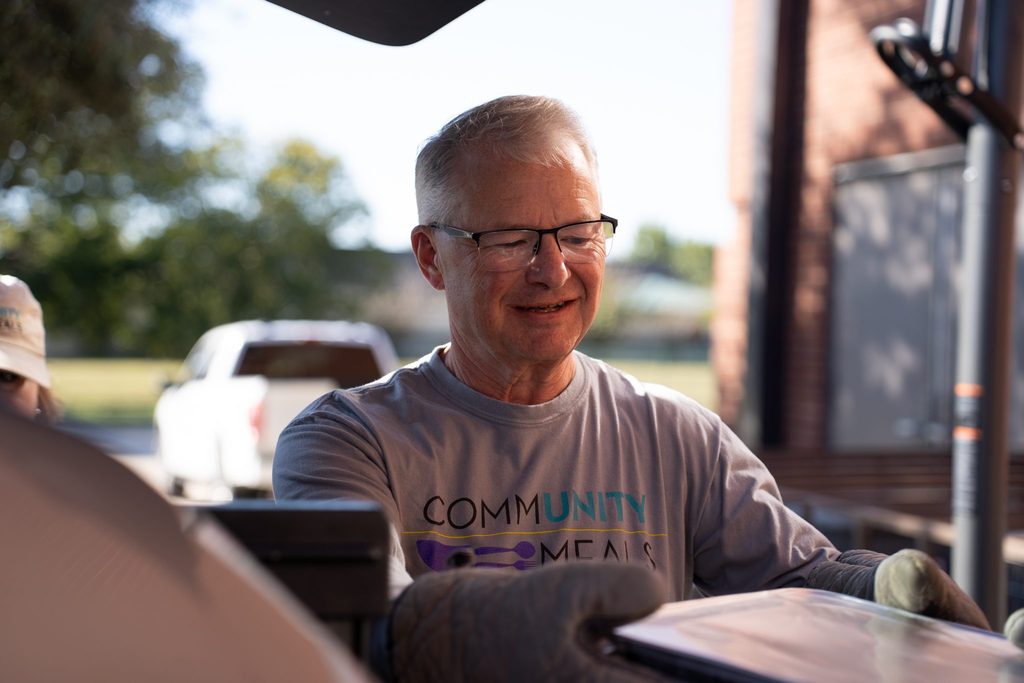
The flywheel keeps turning
After six years stewarding the Dickies brand into VF’s portfolio, Randy retired. Mostly.
Randy’s brother – an executive at Nintendo’s North American operations in Seattle – knew Kurt Maass at CFO Selections®.
“He said, ‘I heard about something you might be interested in,” Randy recalls. “When CFO Selections® opened a Dallas-Fort Worth office I signed on.”
“It’s a flywheel thing,” he says. “You get something going and that inertia starts to change, and it starts feeding on itself – as long as you manage it well.”
And it’s still turning.
Today, Randy spends about five hours a week with a services company, putting processes in place, and helping a couple of entrepreneurs navigate the shift from instinct to infrastructure.
“When they first talked to me,” Randy says, “their reaction was, ‘Wow, you were the CFO of a $2 billion global business? That’s not us!’”
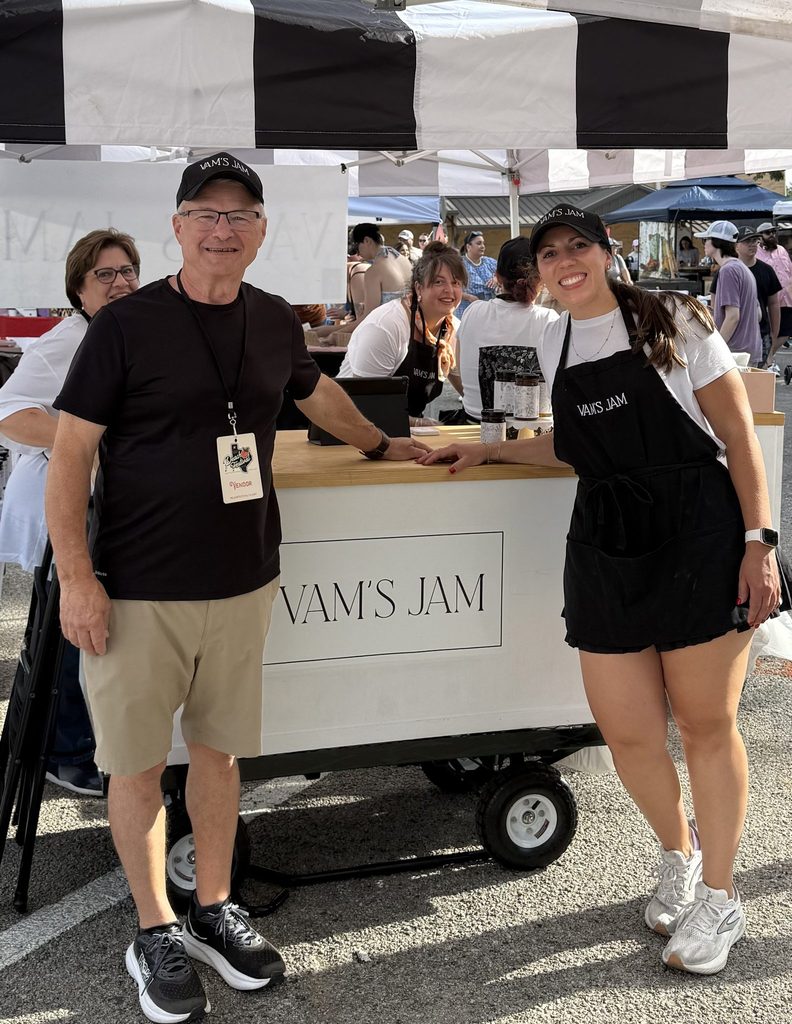
But Randy thinks of himself differently. He’s also a jam operator. He rolls up his sleeves. He does the work.
Paid by the smile
The CFO who negotiated an $820 million sale is, these days, also a jam operator. Trained on a commercial production machine he and his niece had to import from Italy to keep up with demand.
During COVID, Randy’s niece – a biomedical engineer at Abbott Labs with food science in her training – made a strawberry-rosemary jam as a Mother’s Day gift. People loved it. She started selling it locally and soon demand outgrew her home kitchen, then the commercial kitchen she built. She imported a production machine from Italy.
When the technician came over to train her on the new machine, Randy got trained too.
His wife, an accountant, does the books. His daughter helps at the farmers’ markets. His sister-in-law sources the fruit and herbs. And Randy runs the production machine and manages inventory.
Beyond the jam, Randy advises his church on their financials and capital campaigns. He spent almost eighteen years on the board of trustees at Evangel University, his alma mater, three of them as chair. None of these positions pay; some, like Evangel’s, you participate by providing your time, talent and treasure.
“I want to be the kind of person now that I always wished I had access to in my younger years,” he says. “Someone who can help other people figure it all out.”
Tomorrow morning, he’ll be back at the production machine. Paid by the smile.