
The CFO'S Perspective

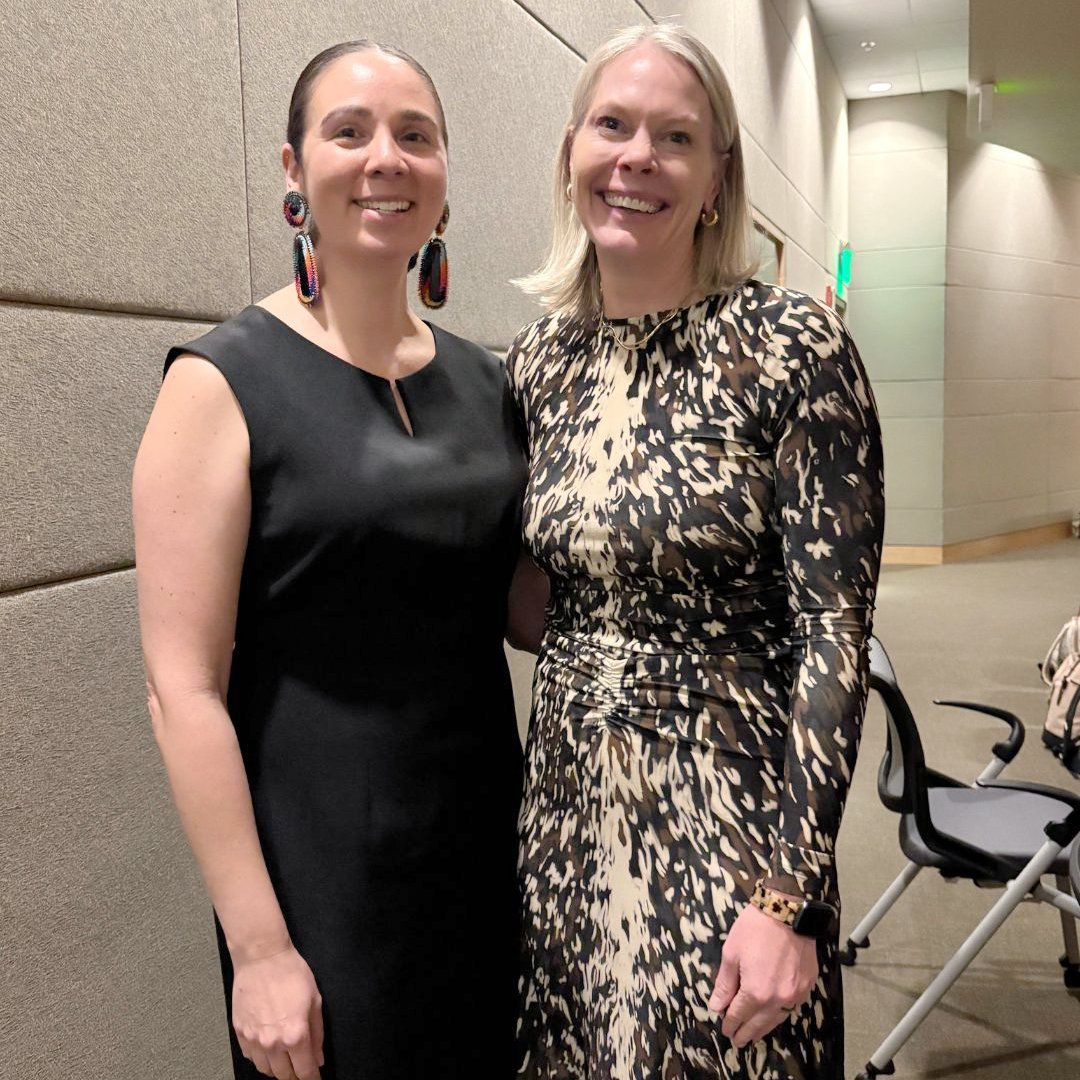
The People Behind the Numbers: Meet Rebecca Alderfer

At CFO Selections, we may work in numbers… but we’re in the business of people. Because behind every financial report is a person making hard decisions, and behind every engagement is a human-to-human connection. In this series, we’re shining a light on those stories — introducing the consultants who guide our clients forward and the leaders who bring those numbers to life.


When Connection Is the Strategy

Ask Rebecca Alderfer what she loves most about her role, and she doesn’t mention policy (even after two decades working at the intersection of strategy, social impact, and public policy). What lights her up is connection, forging new partnerships, linking strategies across silos, and aligning people around shared goals.

“It’s really that chessboard,” Rebecca says. “How can we all support each other? Where can we leverage resources and opportunities that already exist? How do we grow the platform together, so that everyone benefits?”

That mindset has defined her career from the White House to the frontlines of maternal health in Colorado. As CEO of the Colorado Perinatal Care Quality Collaborative (CPCQC), she’s no longer advising from the sidelines. She’s leading the charge, helping the organization grow from a startup into a statewide force for improving maternal and infant health.

Topics: Governance Non Profit Organizations Success Stories Planning Leadership Growth This is Us Change Management Transition Company Spotlight Strategy client spotlight

The People Behind the Numbers: Meet Tom McDowell

At CFO Selections, we may work in numbers… but we’re in the business of people. Because behind every financial report is a person making hard decisions, and behind every engagement is a human-to-human connection. In this series, we’re shining a light on those stories — introducing the consultants who guide our clients forward and the leaders who bring those numbers to life.


Public accountant. Investment banker. CFO. Former president of the largest Italian car show in the world.

If you’re a collector of Italian cars, you might recognize Tom McDowell from Concorso Italiano. But closer to home, he’s known as a connector of people.

“Have you ever heard the phrase ‘the Seattle freeze?’” Tom asks. “People who are new here have difficulty establishing relationships. It took me years before I finally felt like I was accepted.” Now, he pays it forward. “I’m sensitive to that when I meet people who are new to the community. I talk with them, get to know them a little bit, and introduce them around.”

Tom has been in Seattle for over three decades now, but his storied career stretches even longer (and farther south).

Topics: Planning Leadership Growth This is Us Transition Company Spotlight Strategy Business Development

When to Use a ‘Decision Tree’ for Business Planning

For those not familiar with the term, a decision tree is a flow chart that works through all possible response options in a scenario to analyze resulting outcomes. Basically, it is a visual version of an “if this then that” statement across all possible alternatives.

The “branches” off each decision alternative that result use data analysis to forecast the most likely outcome of each decision. When one decision leads to another decision that must be made, that branch splits to continue extrapolating the effects of each subsequent decision. The result is a tree-like diagram (hence the name) that is easy to understand and interpret.

Decision trees can be more conceptual in nature or have numbers to back up decision scenarios, as is the case of pricing changes affecting revenue figures. For decision trees with complicated calculations, a software program can assign values and probabilities to streamline decision-making. A decision tree is a critical part of strategic planning because it allows decision makers to analyze the effects of a significant change throughout different areas of the business.

Topics: Data Analysis Planning Analysis Leadership Growth Forecasting Risk Management Change Management Strategy

Understanding the Importance of Financial Modeling: Should You Build a 3-Year Model?

“How do you build a three-year financial model?” It’s a question we get (and answer) a lot.

A financial model is a type of financial projection that pulls together important data to allow organizations to analyze their current financial position and predict their future financial position. While effective financial modeling takes significant time and expertise to complete, the considerable benefits provided make it well worth the investment. Financial modeling is an essential tool used to manage risk, allocate resources, make smart investments, secure funding, and develop long-term growth strategies.

Some projections are over a longer time horizon while others only cover a short time horizon. However, whether your financial model covers two, three, five, or ten years, it’s important to understand what it should accomplish, why you should do one, and what it should include. Find out now why you need financial modeling and how to build a financial model for your organization that will offer the insights needed to make key strategic decisions.

Topics: Finance Trends Planning Financial Projections Risk Management

Business Continuity Planning and Risk Management

One of your most important tasks as a business leader and manager is mitigating risk. Understanding what kind of risk exists, planning for the impact of this risk, and executing continuity plans to keep the organization operational during a disruption is of paramount importance. The earlier risk can be identified, assessed, managed, and integrated into strategic planning, the better.

Typically, this burden falls on the C-Suite, but leaders at all levels should be included in the planning stage to ensure buy-in across the company. While it is easy to task an individual with overseeing risk management, ideally, it should not roll up to a single person. An emphasis on risk mitigation should be ingrained across the organization with alignment and compliance at every level. CFOs leading the charge can get their organizations on board to share the responsibility by taking a four-step approach to business continuity planning.

Topics: Planning Risk Management Transition

Emergency Preparedness Best Practices: Planning for the “Unordinary” Days

As I was working on this article, the region where I live was hit by a "bomb cyclone" – an ocean-generated storm that, while not rising to the level of the Atlantic and Gulf Coast hurricanes, still did plenty of damage to our electrical grid. The CFO Selections/ASP/Valtas Group headquarters and my home office were both without electricity for several days. This experience reminded me that whether it’s at work or at home, being prepared for an emergency is always important.

Most of us believe we are ready for the everyday kind of disaster at work, whether we’re working at home or in a traditional office. We may carry extra cash and safety pins, and our cell phones allow us near-instant capability to “phone a friend” if we need help because something unexpected happens. And while these things are enough for ordinary days, taking a little time to plan before an “unordinary” day happens can make getting through it a whole lot easier.

Topics: Planning

How to Create a Financial Business Plan for a New Venture

Every year, millions of people have a great idea for a product or service. It might be either the formation of a new business or an addition to a current organization. Some never get off the ground, but some end up changing the world! According to recent data, 90% of startups fail every year, but the remaining 10% offer the potential to shape how we live our lives and transform the communities around us in significant ways.

Having a well-thought-out financial plan is often the difference between having a venture that ends in disappointment and one that soars. So, how can you set your new venture up for success?

Topics: Planning Financial Projections Budgeting Start-up

What is The Difference Between COGS and SG&A?

As fractional CFOs (Chief Financial Officers) we get a lot of questions about COGS (Cost of Goods Sold) and SG&A expenses from our clients. They want to know how to classify different types of expenses, which one to focus on when trying to control costs, how to think about them when evaluating business opportunities, and what kind of impact each can have on profitability. As such, their questions often span the two interconnected worlds of accounting and finance.

From an accounting perspective, categorizing expenses correctly helps to ensure regulatory compliance and aids in ongoing cash flow management. While from a finance perspective, understanding their impact on revenue growth allows for effective long-term financial management. For these reasons, having a firm handle on the difference between SG&A and COGS is a critical component to running any business.

Topics: Accounting Planning Financial Projections Cash Flow Growth Forecasting Expenses