
The CFO'S Perspective

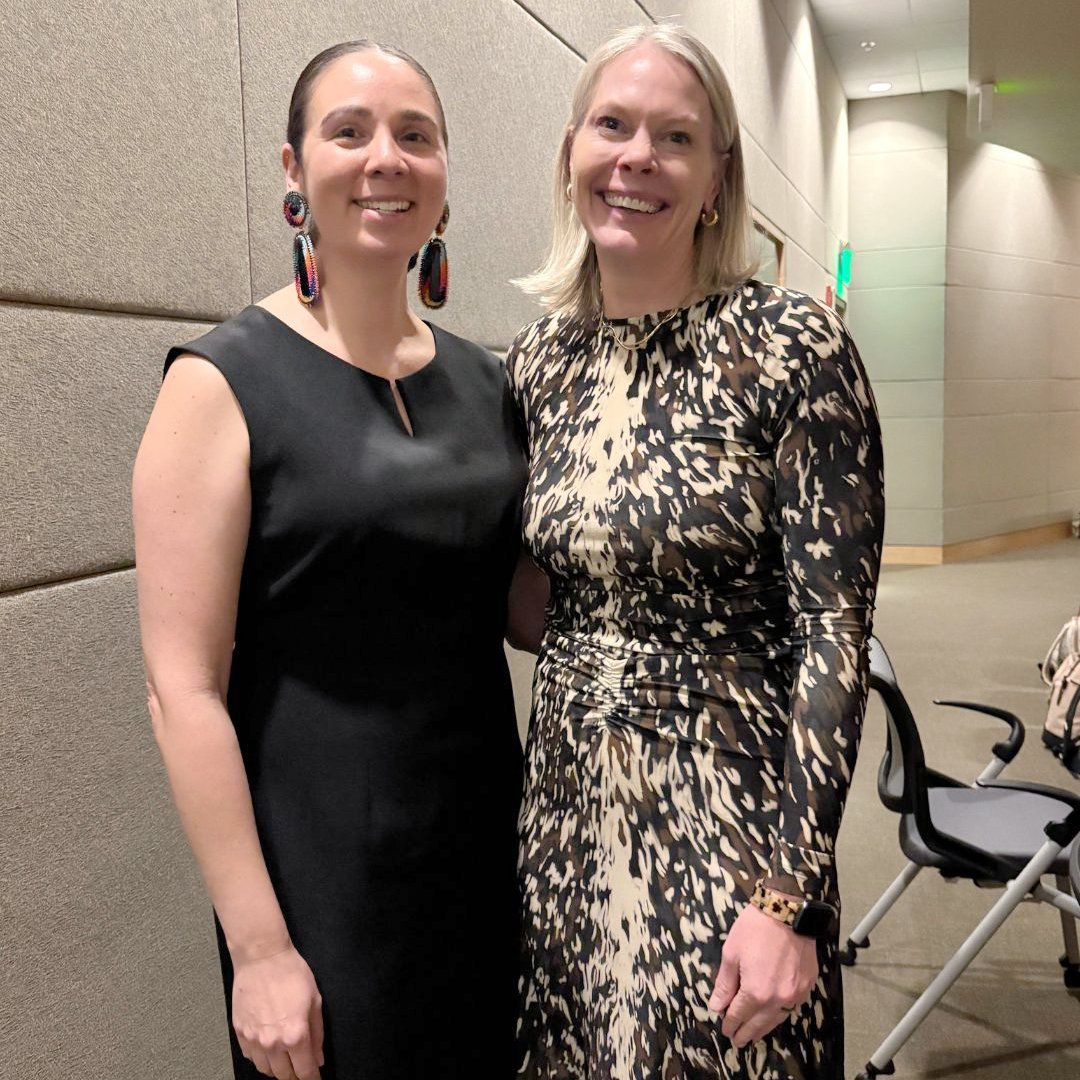
The People Behind the Numbers: Meet Rebecca Alderfer

At CFO Selections, we may work in numbers… but we’re in the business of people. Because behind every financial report is a person making hard decisions, and behind every engagement is a human-to-human connection. In this series, we’re shining a light on those stories — introducing the consultants who guide our clients forward and the leaders who bring those numbers to life.


When Connection Is the Strategy

Ask Rebecca Alderfer what she loves most about her role, and she doesn’t mention policy (even after two decades working at the intersection of strategy, social impact, and public policy). What lights her up is connection, forging new partnerships, linking strategies across silos, and aligning people around shared goals.

“It’s really that chessboard,” Rebecca says. “How can we all support each other? Where can we leverage resources and opportunities that already exist? How do we grow the platform together, so that everyone benefits?”

That mindset has defined her career from the White House to the frontlines of maternal health in Colorado. As CEO of the Colorado Perinatal Care Quality Collaborative (CPCQC), she’s no longer advising from the sidelines. She’s leading the charge, helping the organization grow from a startup into a statewide force for improving maternal and infant health.

Topics: Governance Non Profit Organizations Success Stories Planning Leadership Growth This is Us Change Management Transition Company Spotlight Strategy client spotlight

The People Behind the Numbers: Meet Tom McDowell

At CFO Selections, we may work in numbers… but we’re in the business of people. Because behind every financial report is a person making hard decisions, and behind every engagement is a human-to-human connection. In this series, we’re shining a light on those stories — introducing the consultants who guide our clients forward and the leaders who bring those numbers to life.


Public accountant. Investment banker. CFO. Former president of the largest Italian car show in the world.

If you’re a collector of Italian cars, you might recognize Tom McDowell from Concorso Italiano. But closer to home, he’s known as a connector of people.

“Have you ever heard the phrase ‘the Seattle freeze?’” Tom asks. “People who are new here have difficulty establishing relationships. It took me years before I finally felt like I was accepted.” Now, he pays it forward. “I’m sensitive to that when I meet people who are new to the community. I talk with them, get to know them a little bit, and introduce them around.”

Tom has been in Seattle for over three decades now, but his storied career stretches even longer (and farther south).

Topics: Planning Leadership Growth This is Us Transition Company Spotlight Strategy Business Development

Is My CFO Underperforming?

As executive financial recruiters we work with companies every day who have lost their CFO for a variety of reasons. The CFO may have left to pursue a better opportunity, retired, or made a career change. And in some instances, the CFO may have been shown the door due to subpar performance.

In all honesty, the latter scenario is the least common. Most organizations are hesitant to let their CFO go because of the inherent doubt in the process of doing so. First, there is the big question of how to determine whether your CFO is making the grade. (You certainly do not want to let your CFO go if you cannot be certain that someone else will be able to do the job better!) And, secondly, there is the daunting prospect of needing to find a replacement that is going to be better performer.

But just because it is not very common in practice does not mean it should be. Companies, especially those with owners and CEOs that do not have strong financial acumen themselves, do not typically evaluate their financial leadership as thoroughly as they should. Unfortunately, if your CFO is underperforming, not identifying this in a timely manner or not doing anything about it, can be extremely costly. When your financial leadership is falling short of expectations, strategic planning can fail, affecting revenue and profitability.

Topics: CFO Analysis Leadership Growth CFO Responsibilities Assessment Strategy

When to Use a ‘Decision Tree’ for Business Planning

For those not familiar with the term, a decision tree is a flow chart that works through all possible response options in a scenario to analyze resulting outcomes. Basically, it is a visual version of an “if this then that” statement across all possible alternatives.

The “branches” off each decision alternative that result use data analysis to forecast the most likely outcome of each decision. When one decision leads to another decision that must be made, that branch splits to continue extrapolating the effects of each subsequent decision. The result is a tree-like diagram (hence the name) that is easy to understand and interpret.

Decision trees can be more conceptual in nature or have numbers to back up decision scenarios, as is the case of pricing changes affecting revenue figures. For decision trees with complicated calculations, a software program can assign values and probabilities to streamline decision-making. A decision tree is a critical part of strategic planning because it allows decision makers to analyze the effects of a significant change throughout different areas of the business.

Topics: Data Analysis Planning Analysis Leadership Growth Forecasting Risk Management Change Management Strategy

5 Scenarios When a Fractional CFO is a Must-Have

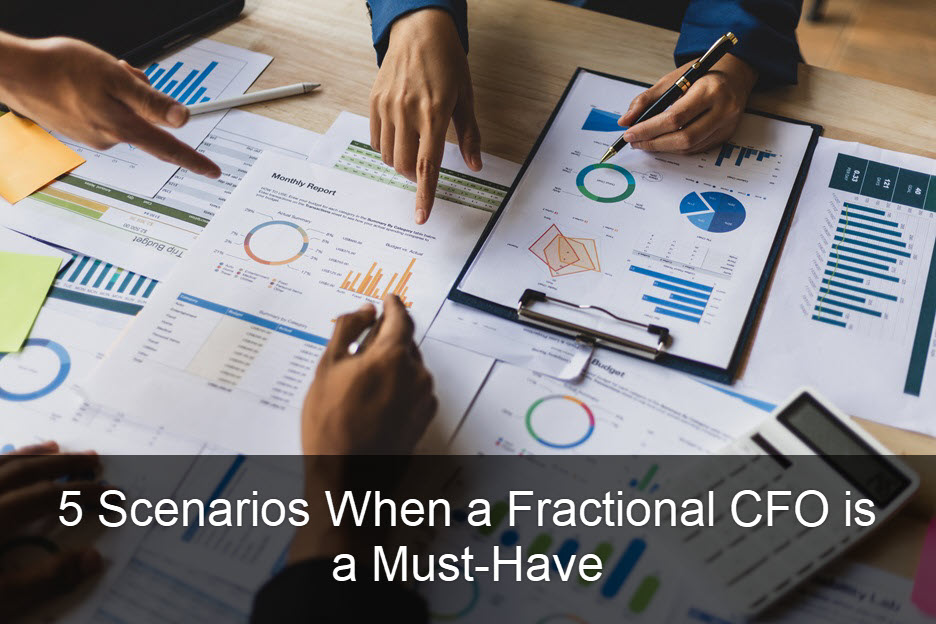
Regardless of size, industry, or location, strong financial leadership is a vital component of any organization’s success. Yet, small and mid-sized companies often forgo hiring a CFO due to budgetary constraints. This is where bringing in a fractional resource can help! An outsourced fractional CFO will perform the same duties as an in-house full-time CFO, but on a more limited time basis.

For those that are not familiar with the term, “fractional leadership” covers anything that is less than full-time. That means a fractional CFO may perform ongoing accounting/finance duties for a set number of hours every week for months or even years while the company grows until it reaches a point where it has enough work to justify the cost of a full-time hire. In this way, a fractional CFO is a great steppingstone as an organization grows or undergoes significant transition. In other situations, a fractional CFO may be brought in to provide short-term business project oversight or to clean up a mess that has resulted from a major accounting issue.

So, let’s look at when a fractional CFO is an absolute must-have.

Topics: CFO CFO Responsibilities Strategy Start-up

What Should Organizations Do to Prepare for a Recession?

We’re trying something new today by giving our readers access to insights from an internal conversation we’ve been having! In a recent team meeting our experienced CFOs were discussing what organizations can do to get ready for a recession or economic downturn. The list of tips that our team came up with to prepare your business for a recession offers great advice for for-profit and non-profit entities alike, no matter what the future holds. Below is the result of that brainstorming session.

Topics: Planning Forecasting Risk Management Strategy

How Creating Connection is Helping Service Providers Improve Revenue

Creating authentic connections with customers can help companies to attract new customers, retain existing customers, and develop brand advocates to increase customer lifetime value across the organization. It can also benefit employees, strengthening the company from within. Having a meaningful connection with the people they are serving allows employees to find meaning in the work that they do, simultaneously increasing employee retention and making it easier to attract top talent for new roles. The net effect of these internal and external shifts is greater, more sustainable revenue.

Topics: Growth Strategy Service Providers

The Biggest Financial Shifts of 2023

As companies continue to battle unexpectedly high inflation and economic uncertainty, understanding this year’s prevailing trends across financial forecasting, fintech stacks, procurement, and customer attribution can help them to increase revenue and market share. Our ongoing research and conversations with other c-suite professionals in the industry have revealed several key shifts in these areas that can affect not only how a CFO does their job but also how their organizations develop and execute on strategic plans.

Topics: CFO Responsibilities Change Management Strategy Supply Chain Technology