At CFO Selections, we may work in numbers… but we’re in the business of people. Because behind every financial report is a person making hard decisions, and behind every engagement is a human-to-human connection. In this series, we’re shining a light on those stories — introducing the consultants who guide our clients forward and the leaders who bring those numbers to life.
_____________________________________________________________________________________________________
Pat Monaghan will tell you that the highlight of his accounting and finance career isn’t where he’s worked, but who he’s worked with along the way.
Getting to know the people behind the operation
 On a typical day at Lighthouse for the Blind in Fort Worth, Patrick Monaghan could walk through the manufacturing floor and find himself in conversations that had nothing to do with accounting. “I’d talk with the workers, get to know them and their personalities,” he says. “And enjoy the great sense of humor they brought to their work.” Patrick wasn’t just a finance leader moving through a cost center. He was part of a community. This moment says more about Patrick’s career than any job title could.
For more than three decades, finance has been his way of showing up for people: students, parents, faculty, adoptive families, volunteers, blind workers, attorneys, and nonprofit boards. He manages budgets, sure. But his real work lives in the relationships he builds.
“It’s more than just doing your debits and credits and financials,” he says. “It’s enjoyable because you’re working with so many different, diverse people.”
A lifetime of finance, shaped by people
Patrick didn’t intentionally set out to work in nonprofits. His early career was in oil and gas, becoming a CPA while working in downtown Dallas. Once he stepped into nonprofit work, something clicked. “Every day you have a focus, a goal. It’s not just to keep the stock price up. You’re focused on the mission, whether it’s to educate people, to help people adopt, or helping the blind to work and make their own wages. You're building something you can be proud of.”
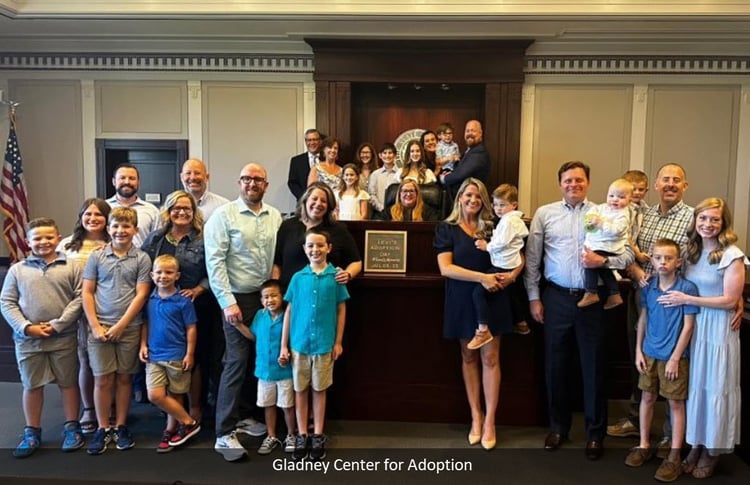
At Kilgore College, Patrick ran GED programs across three counties, oversaw federal grants, and opened a Small Business Development Center. As Controller at Texas Wesleyan University, he coordinated with the registrar, student loan offices, and financial aid. He managed endowment and fundraising activities at the Gladney Center for Adoption, meeting with families and volunteers across the country. And at Lighthouse, he helped lead a manufacturing operation staffed by blind workers.
In each of these roles, numbers were only half of the story. “Besides managing your staff and interacting with departments, you’re engaging with volunteers, students, parents. Just a lot of neat people,” he says.
 Patrick’s steadiness, empathy, and comfort inside complex human environments became the quiet through-line of his career.
This instinct, to see the humans behind the numbers, is the reason SALSA (the San Antonio Legal Services Association) found exactly what they needed in Patrick.
Knowing what you need, before you have to ask
When Patrick began his work with SALSA in the summer of 2025, they were a small but powerful organization in transition. Their Executive Director was preparing to leave, and their Interim Executive Director (also their managing attorney) had a very full plate.
"They didn't have any full-time admin help, no finance people. They were trying to keep up with the finances and also look three to six months ahead.”
Patrick understood the feeling. Nonprofit leaders are builders, stretching themselves in every direction. He also knew what would relieve the most pressure fast, so their team could focus on providing free civil legal services to veterans, the disabled, and vulnerable populations.
"I handled 100% of the audit, so that nobody at SALSA had to worry about it.”
Patrick worked side-by-side with their outside bookkeeper, prepared financials for the board, answered questions from auditors, and gave the interim Executive Director one less fire to put out.
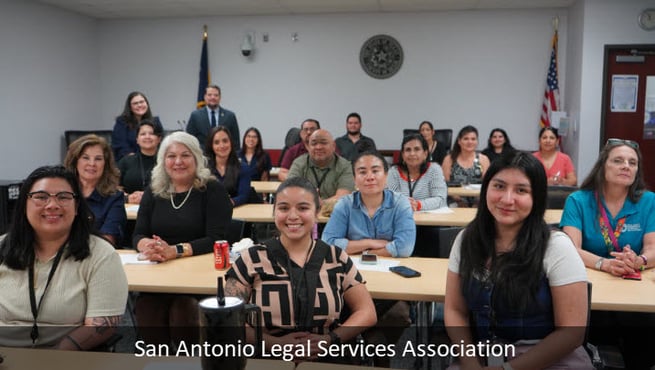 When you understand what the team needs most, you quickly become the person everyone can depend on. And that’s one of Pat’s biggest strengths – understanding what people need before they ask.
Being an insider of the Texas nonprofit community
What made Patrick’s fit with SALSA seamless was not just experience, but his decades of connections within the Texas nonprofit finance community.
"If you're working on something and not quite sure how to handle it, you can call your buddy at another nonprofit or university,” he says. Everybody's always willing to exchange ideas and offer help."
He also knew how to work well with attorneys. At Texas Wesleyan, he partnered closely with the dean and faculty of the law school. This experience mattered to SALSA, where the team is attorney-led.
“It probably gave the board some confidence,” he says. “There wasn’t a learning curve on the financial side for the new Executive Director. This was one area he didn’t have to worry about too much.” When the new Executive Director joined in the fall, this stability allowed their mission work to continue without interruption.
The community-wide ripple effect
A thriving nonprofit community drives connections and collaboration. These interactions then result in opportunities, fueling a community-wide virtuous cycle.
As Julia Bessler from the North Texas Nonprofit Institute (NTNI) describes it, “If you can help the organization, then they can equip their [staff] to do great work. That creates a ripple effect for the community.”
Operational finance is part of that ripple. It steadies leaders, so they can steady their teams. It creates clarity that gives boards confidence and lets executive directors focus on impact, not paperwork. 
After decades in full-time roles, keeping those circles rippling outward is why Patrick moved into fractional work. He wanted to keep impacting lives through the work of nonprofits in his community, without the 50-hour work weeks.
“(Fractional CFO consulting) is a great fit. You can determine how many hours you put in, who you want to work with, and still help organizations that need it.”
Leadership you can feel
For Patrick, stepping into SALSA wasn’t a departure from anything he’d done before. It was an extension of a life shaped by service, community, and connection. The Texas nonprofit world is filled with people who help each other because they know the work is bigger than any individual role. Patrick fits naturally within that fabric.
His gift is understanding what people need before they have to ask and using finance to support them. His way of working reminds people that the financial side of a nonprofit isn’t separate from the mission. It’s what makes it possible. That instinct, to serve with humility, quietly, and consistently is what supported SALSA through transition and continues to guide Patrick’s work today.