The CFO'S Perspective

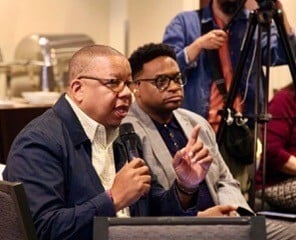
The People Behind the Numbers: Meet Raphael Irving

At CFO Selections, we may work in numbers… but we’re in the business of people. Because behind every financial report is a person making hard decisions, and behind every engagement is a human-to-human connection. In this series, we’re shining a light on those stories — introducing the consultants who guide our clients forward and the leaders who bring those numbers to life.

____________________________________________________________________________________

Raphael Irving was deep in a collective bargaining agreement with no easy answers. He was at a Portland-based Federally Qualified Health Center (FQHC) that was facing a budget deficit, and every decision carried weight.

“When you’re in those rooms,” he says, “you know what you decide is going to affect other people’s lives.”

Payroll made up most of the budget. There wasn’t much room to maneuver.

“Most nonprofits are 65% to 80% payroll,” he explains. “So, when cuts happen, it’s people who feel it first.”

Some nights, the work followed him home.

“There were times I couldn’t sleep,” he says. “Because I knew if I could figure this out, it meant somebody got to stay.”

The work led to a strategic plan that allowed the organization to move forward. For Raphael, that’s always been the point.

“Money is the oil that makes the engine run,” he says. “If you understand the finances, you can keep the mission moving.”


Topics: Non Profit Organizations CFO Leadership Budgeting This is Us

How to Create a Financial Business Plan for a New Venture

Every year, millions of people have a great idea for a product or service. It might be either the formation of a new business or an addition to a current organization. Some never get off the ground, but some end up changing the world! According to recent data, 90% of startups fail every year, but the remaining 10% offer the potential to shape how we live our lives and transform the communities around us in significant ways.

Having a well-thought-out financial plan is often the difference between having a venture that ends in disappointment and one that soars. So, how can you set your new venture up for success?

Topics: Planning Financial Projections Budgeting Start-up

How Experienced CFOs Manage Technology Expenses

These days there are many facets of technology spending to evaluate – everything from software subscriptions and ongoing infrastructure to new AI investments and increasing security costs. Unfortunately, this landscape can quickly become a cost quagmire for less financially experienced CEOs and business owners. Without a strong background in accounting/finance, these kinds of leaders can become distracted by tech solutions that promise big results and have even bigger price tags.

So, how do you keep technology spending in check? The key is to think like a CFO!

Topics: Budgeting Expenses Technology

Your Budget is Wrong… and That’s Okay!

The first thing you need to know when creating a budget is that it is wrong from the start.

In the world of accounting and finance, we like things to be precise and tie out neatly. A budget, on the other hand, is meant to be a predictive tool and a roadmap to help you get to where you are going.

When you enter an address into your GPS, you often get three to four different routes you can take to get to your destination. Sometimes the route has construction or other traffic impediments along the way. Think of a budget somewhat the same way. You build assumptions that you can change based on the route you decide to take and the detours you may face along the way.

Topics: Planning Financial Projections Budgeting

Do You Need to Switch to a Rolling Forecast?

If you’re wondering whether your company needs to switch to a rolling forecast, it’s important to look at why you’re asking. The simple act of questioning whether your current budgeting process is sufficient likely indicates that you have identified a shortcoming in your current budgeting process that provides an opportunity for improvement. Moving to a rolling forecast may offer benefits over your existing methodology, but it’s important to understand the pros and cons associated with using a rolling forecast and what to be aware of when considering switching budgeting methods.

Topics: Analysis Cash Flow Budgeting Forecasting Financial Process

How Much Will Raises Be This Year?

With so much economic uncertainty the employment landscape in 2022 will likely remain tumultuous. Information about how many people are employed, where, and for how much is going to continue to dominate the business news headlines. And much like last year, compensation will be at the forefront of many employees’ minds as they watch their cost of living increase and worry whether their pay will keep pace.

Of course, for the nation’s unemployed, discussions about how compensation may fluctuate this year remain inconsequential. And for small businesses that have been doing their best to absorb rising costs without laying people off or shutting down, the idea of giving raises this year is likely going to be a moot point. But for middle management, executive leadership, and HR personnel at mid-sized to large companies, the question of what to expect in the way of raises remains critical to business planning.

So, what should you plan for a raise this year?

Topics: Recruiting Economic Trends Hiring Planning Staffing Financial Projections HR Budgeting Forecasting Expenses Salaries

The Convergence of Accounting and HR

Companies that understand how finance and HR overlap and foster a relationship between the two are better poised for long-term growth than their less informed counterparts. The reason behind this is simple – knowing when and how to leverage your CFO to assist with hiring and employee retention can improve profit margins, encouraging sustainable long-term growth. Additionally, encouraging collaboration between these two vital areas of the business improves workplace culture across the entire organization.

Topics: Recruiting Finance Accounting Trends Hiring Planning HR Leadership Budgeting Forecasting Strategy

What are the Benefits of Business Process Outsourcing?

Business process outsourcing (BPO) allows CEOs to focus on the job of running the entire business instead of getting bogged down with the management of individual departments and teams.

Effective outsourcing allows both large and small companies alike to lean on senior skillsets outside of the company to provide accurate information, offer impartial feedback, and inform strategic decision making.

In fact, according to a recent Intuit study, 65% of business owners surveyed said they would be “better positioned for long-term growth if they could take a step back and look at the bigger picture.” These business owners also reported that they were involved in areas of the company such as sales, marketing, customer service, human resources, and accounting, instead of outsourcing them. It is no coincidence that these activities were taking away from their ability to focus on their core business functions. When they were asked what they should be spending their time on instead, their top answers included developing business strategy, making an impact on customers directly, and innovating product/service offerings.

Business process outsourcing allows business owners and CEOs to utilize highly experienced professionals without needing to hire internally, both managing costs and improving business agility. Furthermore, outsourcing allows business leaders to reduce stress, lessening the likelihood of executive burnout.

Topics: Recruiting Trends Planning Cash Flow Leadership Growth Budgeting Strategy