At CFO Selections, we may work in numbers… but we’re in the business of people. Because behind every financial report is a person making hard decisions, and behind every engagement is a human-to-human connection. In this series, we’re shining a light on those stories — introducing the consultants who guide our clients forward and the leaders who bring those numbers to life.
Matt Drosendahl will tell you he leaned out his paper route before he knew what lean manufacturing was.
"If I make a left turn around this tree instead of a right turn, I save two steps." Twelve years old, working a route through his Pittsburgh neighborhood, doing time-and-motion studies on himself without the language for it.

That instinct — for where motion is wasted, where a process could be cleaner — has shaped every chapter of his career since. It's also why leaders bring him in when something is changing.
From the factory floor
Matt didn't plan to spend his career in plants. He left Pittsburgh for the University of Virginia determined to study accounting because, as he puts it now, he wanted to be sure he could earn a living when he graduated. After four years at Price Waterhouse and a turn through internal audit at what was then a Fortune 10 industrial company, he found his real footing in steel.
At PTCAlliance, a company that made steel tubing, which is turned into everything from truck axles to gun barrels, Matt served as controller for the largest division. Thirteen manufacturing plants. Roughly two thousand people. About $400 million in revenue. The job gave him something more valuable than the title: hours and hours on the floor.

He went through Six Sigma training. He went through Lean training. He spent time inside plants built for the World War II war effort, watching how product moved.
"Every time you pick up whatever you're making, and you move it from here to there and set it back down, you're spending money," he says. "And the customer doesn't care, they don't pay for that. They pay for the final product."
Motion as cost. That principle became his default lens.
A piece of junk mail
By the time Matt reached corporate controller, leadership at PTCAlliance was grooming him to run a plant — a path that would have led to Chief Operating Officer.
He didn't want it. He wanted CFO.
There was a CFO at the steel business he didn't think was very strong. Matt said as much to his general manager: "I don't know if I'd be a good CFO, but I know I'd be better than that guy." The general manager agreed.
That's when the title settled into something Matt could see clearly.
A few months later, the piece of junk mail arrived.
"It was addressed to me, and it said Matt Drosendahl, CFO, and at the time I was a controller."
He dropped the mailer into his desk drawer and left it there. Every time he opened the drawer, that was the first thing he saw.
"It was my own little vision board, if you will. That CFO. That was what I wanted."
Six months later, the role appeared. He moved his family to Colorado for it.

No therapy required
At Norgren, a global manufacturer based in the U.K., Matt eventually became CFO for the Americas region, a portfolio that ran from Canada through Mexico to Brazil, with about a dozen plants and roughly half a billion in revenue. He had eight or nine controllers reporting to him. He told all of them the same thing.
"The best thing you can do is hit your numbers," he says. "You make your budget, we all move on. Nobody bothers you. So when you miss your numbers — and you will — now you've got to be able to explain why."
If a controller couldn't, the U.K. parent had a phrase for what came next. Matt repeats it dryly: "Now you're going to get therapy."
He laughs. But the point is serious. Financial analysis, in his telling, is mechanical: actuals against budget, this year against last, percentages up and down. Anyone with a spreadsheet can do that.
"The why question is very interesting," he says. "We're down 20% from a year ago. Why? That's an interesting question. It can have a very interesting answer."
That same philosophy traveled into how he mentored his teams more broadly. Matt would tell people: "Focus on what's best for the business. Don't focus on what's best for you, your department or your people.” When two department heads were knocking heads, that question was usually the way through. People line up, he says, when they can see what the answer actually is.
Closer to the work
From the outside, Matt's next move might have looked like a step down. He left the half-billion-dollar global portfolio for a small tech company in Colorado Springs whose main product is the ink that turns the mountains on a Coors Light can blue.
He'll cheerfully explain the chemistry — microcapsules holding a dye, a developer, and a fat engineered to solidify at about forty degrees fahrenheit, snapping the colors together when the can gets cold. He sounds like a guy talking about his own company.
That was the point.
Soon after Matt arrived, the head of operations left. Matt went to the owner and asked for the job. He wanted to do operations, not just oversee them from across a portfolio. He wanted to be close enough to the work to feel it.

Over the five years he ran operations there, the company posted zero lost-time accidents, one late delivery, and no quality returns.
"That's what the owner said he wanted," Matt says. "Alright, this is what I want. Okay, I delivered that."
That same impulse — get closer, be useful, do the work — is what eventually led him to CFO Selections.
Why CFO Selections 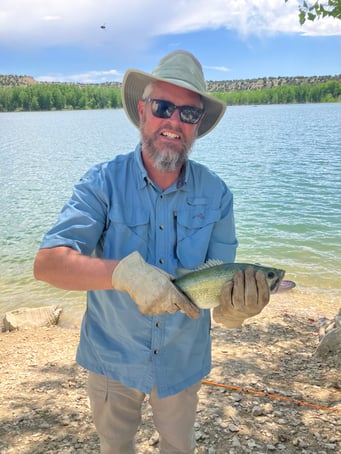
By 2022, with his kids grown and his wife running her own accounting practice, Matt had the financial flexibility to think differently about the next chapter. He didn’t want another W-2 role. He wanted work he could fully commit to for a defined window of time, and step away from when it was done. He started talking to fractional firms.
What drew him to CFO Selections, he says, was two things. The longevity of the firm — the Seattle market had been at this for more than two decades, and the model was clearly figured out. And the people. In Denver, that meant Scott Fowle, who had spent his own career as a CFO and CEO before stepping into the practice leader role.
"Scott understands my skill set, so when he puts me in front of a potential client, it's not just throwing something at the wall," Matt says. "We actually think this connection will really work."
Matt's first major engagement came through that cross-office collaboration. A company in Spokane, Washington had recently been sold by its founder to a Seattle investment firm. As the founder stepped back from day-to-day operations, the firm recognized that an experienced operator on the ground would help the team navigate the transition. The Seattle CFO Selections office had the relationship. Scott had Matt.
For seven months, Matt traveled back and forth from Colorado Springs. Hotel clerks in Spokane learned his name. His job, week by week, was to steady the team while the organization brought a new president on board. By January of the following year, the new president had taken the seat, and Matt had handed everything over.

Different mission, same discipline
The next engagement came that summer. Denver Seminary, a graduate school with master's and doctorate programs for clergy, was working through a CFO transition under a new president. Matt was upfront from his first board of trustees meeting: his background was manufacturing, not nonprofit, and he wasn't going to pretend otherwise. He told the board he'd flag what would concern him if this were a for-profit business.
The committee chair, a retired banker, leaned in.
"He absolutely loved it," Matt says. "And I think most of the people on the committee really liked that."
The point Matt was making is one he's carried into every nonprofit conversation since: the goals of the organization may well be different, but having more money is better than having less. More money funds more programs, bigger programs, whatever that looks like.
A few months later, the seminary had a new CFO in place, and Matt had handed over a written assessment of the team, the systems, and the things he'd change. Then he went home.
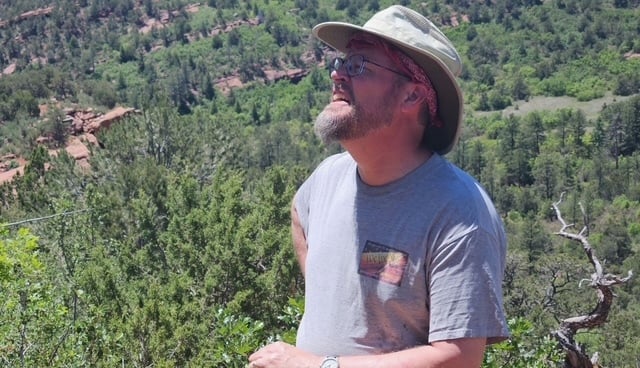
Perspective is the product
Ask Matt what he actually offers a client, and he doesn't lead with finance. He leads with point of view.
That perspective comes from spending a career inside the work. “This is what we do, right? We make beer, or we make ink, or we make steel tubes,” Matt says. I like to actually get my hands on it. I wanted to see how it came together. I wanted to see how our money was being spent. I wanted to see where the value was.”
Once Matt is inside the work, he can name what’s happening in it. “You really get to dial in with the health of the business,” he says. “These are the things we need to fix. These are things going well.”
That thinking, he says, is what he tries to bring to every client. “When I can bring that to my clients, that sort of thinking, and they want that – that’s valuable to them, and it’s enjoyable for me.”
"You want to be of use to them," he says. "If they're receptive to that, and they want to get better, and they value that, I love it. I'll do it all day long."
The envelope
The habit that envelope represents has stayed. 
Matt has spent his career deciding what he wanted and then arranging his life around it. The CFO title. The move to Colorado. The pivot from a global portfolio to a single site so he could be closer to the work. The shift to interim consulting, where he gets to be all the way in when an organization needs him — and all the way out when they don't.
"I'm either all on, or I'm all off," he says. "And when I'm all off, I don't want to have any responsibility, frankly. Take naps. I love my naps. I can travel."
Between Spokane and Denver Seminary, that meant seven months of being off. Which, he says, works for him.
Each move began the same way: a clear picture, then the patience to wait for it to appear.
"It's gonna sound woo-woo," Matt says, "but you manifest it, right? I manifested this sort of position."
Then he goes to take a nap.