At CFO Selections, we spend our days inside the financial realities of growing businesses… close enough to see what keeps owners up at night, what they're building toward, and what gets in the way. This series brings those conversations forward: the questions CEOs are wrestling with right now and the decisions that carry real weight. We write from the CFO's seat, but that viewpoint is created with the person sitting across from us.
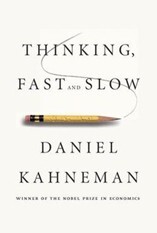 Daniel Kahneman’s famous book wasn’t about speed. It was about which mode of thinking is running the show: reactive and instinctive, or deliberate and strategic. Business owners, whatever their industry, are running hard: next quarter, next crisis, next decision. The conditions that allow for deliberate, strategic thinking don’t create themselves. That’s the CFO’s real job: building the environment where strategy can take root, innovation can follow, and growth becomes possible. Gary Christianson and Larry Breitbarth do this for companies with very different needs. The way they get there might look different, but what they’re building looks the same.
Two worlds. Same job.
Gary Christianson’s clients are running hot. They’re tech founders racing to launch AI agents, fending off free competitors, and trying to reach an exit before the runway runs out. The pressure is constant, the decisions are fast, and the stakes feel existential every single week.
Larry Breitbarth’s clients move differently. They’re manufacturers, distributors, service businesses built on instinct and hard work over decades. The pressure isn’t about speed. It’s about survival of a different kind: getting off cash basis, planning for a succession no one wants to talk about, borrowing smart through the lean season so the business is still standing when Q4 cash comes in.
Gary and Larry are both CFO Selections consultants serving different industries, with clients facing different pressures. But what they do for their clients is exactly the same: they quiet the reactive brain and build the architecture for strategic thinking.

It starts with the people supporting the organization. Before any system is built or forecast is modeled, Gary and Larry start by making it safe enough for the people inside to think bigger.
“For us as CFOs coming in, it’s almost like we’re psychiatrists,” says Larry. “The very first thing we do on any project is create trust.”
The historian and the strategist
Most small and mid-sized businesses have a controller. Controllers are good at their job: they tell you what happened last quarter. They’re historians, focused on costs, keeping the books clean. What most owners haven’t had, until now, is someone in that forward-looking seat.
“The CFO is forward looking, focused on revenues, and they’re strategic,” Larry says. “That’s very different than the experience a lot of these owners have had.”
For Gary, forward-looking means replacing the static annual budget entirely. “What we have is not a budget,” he says. “What we have is a dynamic investment model, a dynamic forecast. Instead of measuring our actual performance against some static budget, we’re constantly adding in, instead of reducing costs.” With automation handling the historical close, Gary can spend his time on the question that actually matters: how do we maximize valuation and keep an eye on cash flow?

For Larry, it means noticing the IT guy who maintains the entire costing system is about to retire. Getting a seasonal business to model its cash monthly so it knows exactly how much to borrow in Q2 and Q3; otherwise it sits on cash it should be putting to work. Bringing in a better bank, a better accounting firm, sometimes a better insurance company.
“It seems simple,” Larry says, “but a lot of businesses are unable to forecast cash flow on a monthly basis. That’s one place where we are a huge help.”
The founder’s trap
There’s a reason founders stay reactive. It’s what built the business. The instinct, the relationships, the ability to make a call and move: that’s the origin story. But over time, a founder becomes synonymous with the business. And when they’re trying to exit, that’s a problem. If they leave, the relationships leave. The innovation leaves.
Gary helps founders escape this trap through financial architecture: debt financing that’s non-dilutive, keeping them in control while buying them the runway to keep growing. “The constant fear is that you’re running out of cash before you have some sort of exit event,” he says. One of his clients is interviewing investment bankers for a potential exit later this year. That outcome didn’t happen by accident.
“By successfully bringing in debt financing, in so many cases, that’s gotten them to their exit,” Gary says. “Or it’s gotten them to an equity financing event... because it allowed enough bandwidth to grow the business to the point where it warranted raising it.”
For Larry’s clients, the work is structural and relational. It can take years to get a founder-led company ready for transition: building the team, creating a succession plan, engaging with a new accounting firm that can get them to GAAP.

“That’s kind of the day in the life of a CFO,” Larry says. “We’re a quarterback of sorts. We can tell you, ‘You’ve got a risk over here that you haven’t really thought about.’ That’s how we add huge value.”
Trust first. Everything else second.
There’s the controller who’s made themselves indispensable by keeping everything manual and dependent on them. There’s the bookkeeper who’s been doing it the same way for twenty years and isn’t looking to change. There’s the entire organization that reads “CFO” and hears “layoffs.” Gary and Larry both see this often. It’s the obstacle that sits in front of everything else.
Larry describes himself as a walking suggestion box. The things the controller has been asking for and getting a “no” – the hire that never happened, the system upgrade that kept getting deferred – Larry goes after those. “I’m going to try to get a ‘yes’ for them,” he says.

Gary brings a similiar approach to the bookkeepers who dig in their heels. “I tell them, ‘We’re still going to automate. Don’t worry, you’re secure. We can just shift our focus to things that provide more value. It’s going to make your life easier.’”
Once that safety exists, the work moves.
The simple tool that takes you places
On Larry’s bookshelf sits a basic carpenter square. His dad was a carpenter. The L-shaped tool is a daily reminder: something simple can be solid and useful. And in the right hands, with the right thinking, it can take you places.
That’s what Gary and Larry do. They don’t replace what founders have built. They build the foundation underneath it so the vision has somewhere to stand, and somewhere to go.
Fast-moving industry or steady one, the job is the same: stop managing yesterday. Start thinking about tomorrow.